Tuesday, 28 April 2015

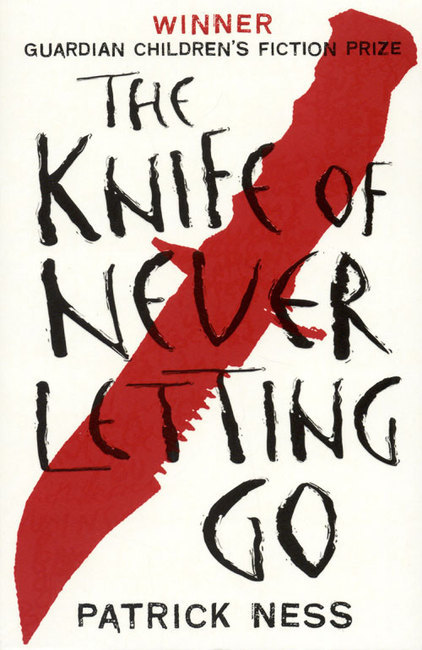
'The Knife of Never Letting Go' by Patrick Ness

I haven't adored a book as much as this in a while. Patrick Ness's 'The Knife of Never Letting Go' is probably one of the most absorbing, exhilarating and altogether fantastic works of imaginative fiction in the last decade. In my view, it should rival if not usurp the lofty position of 'Northern Lights' by Philip Pullman as a wholly original masterpiece for young adults and (old) adults alike. There are not enough superlatives to express just how extraordinary this book is. Two words: read it!

Set in a dystopian world, where men can hear each other's thoughts, Todd is a thirteen year old boy on the edge of adulthood. It is not only men who can hear each other's thoughts but every living thing too. Everything is Noise. And yet, Todd and his stupid dog Manchee discover a gap in the noise; a silence...

It is best not to say anymore because there are so many twists and turns that I thought I was going to hyperventilate as a result. The story is written from Todd's perspective, through his Noise, which is just genius. Todd speaks in a distinct dialect with a clear inability to speak (or think) coherently. But he is just so captivating. We are literally in his head through it all- and my is there a lot he goes through! Ness just brilliantly infuses form and content so well that other character's interacting with Todd's narration does not seem at all out of place. While Pullman had daimons pestering around heads, Ness just bombards us with NOISE! It could so not have worked, but it does... magnificently!

I really don't want to say more except read it, immediately! It surely is destined to be a modern classic. I hope it does. It should be right up there with Pullman; it certainly won all the prizes going! I cannot wait to read the sequels. It is almost impossible to imagine where it all might go, and I love that: an impossible imaginative possibility...


Sunday, 19 April 2015

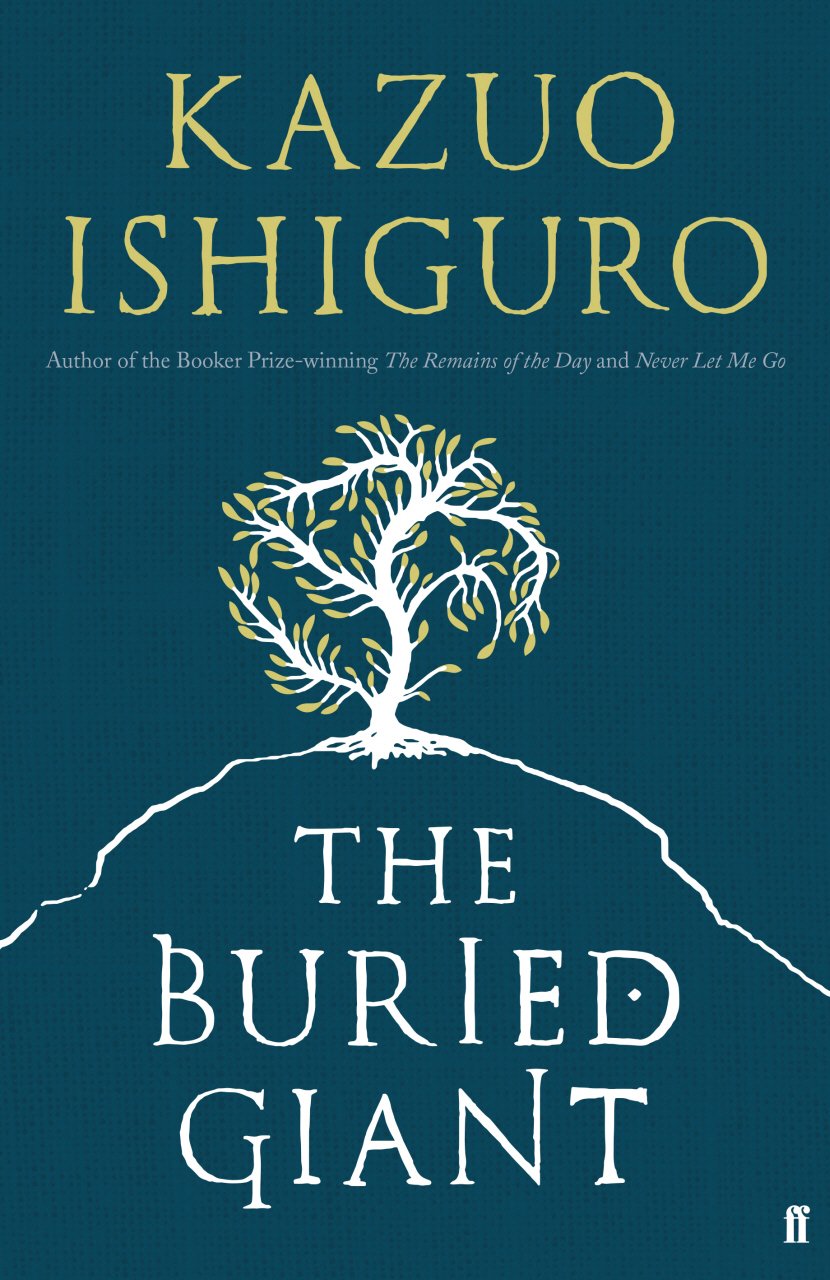
'The Buried Giant' by Kazuo Ishiguro

Literary fiction? Fantasy? Historical fiction? Something else? 'The Buried Giant' by Kazuo Ishiguro eludes classification. It is a strange, otherworldly story which manages to haunt you for some time. Hallucinatory, mythic, dream-like it certainly reads differently. It is either one to love or one to abandon as an experimental folly.

Set in a post-Roman Britain, the story follows an elderly couple, Axl and Beatrice, as they leave their simple village to find their long lost son. But it is not easy. A mist covers the landscape, preventing most people from remembering their pasts clearly. And, oh, there are ogres...

Occasionally I love to read a sprawling fantasy novel. I loved 'Lord of the Rings' as a child and have recently posted a review holding 'Magician' by Raymond E Feist in high regard. However, reading 'The Buried Giant' by Kazuo Ishiguro is unsettling. It feels like a fantasy but doesn't read like one. Instead I am inclined to believe Ishiguro has written something to baffle the reviewers and blur the line between the lofty heights of literary fiction and the 'lowly' realm of popular mainstream fantasy. There is an argument that fantasy novels, such as 'Game of Thrones', could never win the Booker Prize. With 'The Buried Giant' it seems like Ishiguro is trying to stake a claim in the opposite. And yet, I am not sure if it quite works.

There are references to Arthurian legend and Sir Gaiwan the Green Knight. Dialogue litters large junks of the narrative. There are stories within stories. In some respects, the story reads more like a medieval epic poem with legends and archetypal imagery. Some elements of the story dragged, while other parts were so surreal and mysterious you couldn't help but read on. The ending, in particular, was hugely sad and I found myself near tears. But why? The narrative had a depth but only in a way that some bizarre dream might have depth; all foggy and half complete. I guess this is what I feel with 'The Buried Giant'; it seems a bit uneven, a bit too trying. But I cannot help but love it. And book clubs should read it only to debate it.

It's not the best fantasy I've read. It's not the best novel I've read by a prize winning author. But it's worth a read if you want something ambiguous and strange.


Saturday, 11 April 2015

'Reasons to Stay Alive' by Matt Haig

Matt Haig is quickly becoming a literary hero of mine. His latest book 'Reasons to Stay Alive' is an inspiration. I read it in one sitting on Clapham Common. To my delight, I felt I had spent time with a friend whose honesty, wisdom and wit reassured me like a lighthouse beaming brightly over choppy waters.

Like 'The Humans' (his last book), 'Reasons to Stay Alive' probes with insight and good humour into what it truly means to be human and happy.  But unlike 'The Humans' this is a personal account of Haig's own life battling with depression and anxiety; those 'choppy waters.' And I was comforted by his story. I made connections and comparisons with my own life and similar, previous struggles. But I was also inspired by his positive, sensitive approach to what is often a difficult subject. On many occasions I found myself either nodding in agreement or close to tears. At many points I wanted to jump up on the Common and punch the air like a cheesy character at the end of a life affirming film. This is what Haig does best; he is like the best of friends who knows just how to cheer you up and straighten you out because he has been to the edge (quite literally) and lived to tell the tale.

A particular chapter I enjoyed included his account of going to the local shop, suffering huge anxiety. The struggle he details in this shop and the interior monologue he describes is both painfully funny and truthfully painful. I had similar experiences in Leeds too. Once, I was completely paralyzed with fear choosing a sandwich so I understand Haig's experience all too well. What he does so well though is to write about his difficulties with compassion and humour. We should be able to laugh as much as cry about these things.

The chapters that include fictional conversations between himself now and himself then are genius. The problem with depression is the inability to see any future, but such fictional conversations show a great strategy that could help imagine a better future. Haig's writing is in-itself imaginative, it crackles with life, and this alone is what makes 'Reasons to Stay Alive' more useful and more life-affirming than any self-help book. His personal experiences and personal 'toolkits' are more instructive, creative and humble than perhaps any other kind of psychological paper.

I would recommend this to anyone. If you have been sad, read it. If you are happy, read it. If you are alive, read it. You'll find some reasons...


Friday, 3 April 2015

'Silas Marner' by George Eliot

Her favourite book, 'Silas Marner' is one of George Eliot's shorter novels, but one with a big heart. It is a simple tale with big themes and adorable characters. As would be expected, Eliot paints a charming picture of an old English countryside; complete with rich, poor, religious and superstitious. As a fan of Dickens, I very much enjoyed Eliot too.

Silas Marner is a simple weaver, who having been exiled from a religious community in Lantern Yarn, sets up a new, isolated life in the primitive village of Raveloe. Here his fortunes do not improve, for soon enough Marner's stash of gold, hidden under his loom in a hole in the floor, is stolen and Marner's faith in humanity is again diminished. Symbolically, however, a twist of fate pairs him with a girl of two years, who wobbles into his home unexpectedly, sporting coils of golden hair. At once Marner's gold is replaced by another kind of gold. Slowly his isolation is reversed and his standing in Raveloe becomes of greater repute.

There are, of course, other elements and twists to the story, but in its essence 'Silas Marner' is like a revised folktale given 19th century context. The symbolism is obvious; Marner finds gold in the immaterial and in his unexpected love for the orphan child. The fact that his local pub is called 'The Rainbow' is tantamount to the romantic notion of finding gold at the end of one. Fairy-tale at its heart, the story, because of its realistic context, is able to explore themes that another tale couldn't. Is the child a gift from God? Is Marner's transformation inevitable or divine? Is it better that the child be raised in poverty, but with love, than in wealth and disregard? Such questions are raised, but for me the appeal of the novel is in Eliot's beautiful, though unsentimental, descriptions of the relationship between the old man and the golden child. In the end, I felt it was heartbreaking, but whereas Dickens could make more of this, Eliot is capable of a restraint which only heightens the sentiment, between the lines. In truth, I was less engaged with the chapters dealing with the wealthy families of Raveloe, though perhaps this serves only to feel more sympathy for the humble, mysterious, though ultimately lovable Silas Marner.

I am yet to read other Eliot classics, but this seems a great place to start.


Thursday, 2 April 2015

'The Narrow Road to the Deep North' by Richard Flanagan

Winner of the 2014 Man Booker Prize, Richard Flanagan's 'The Narrow Road to the Deep North' is a harrowing, graphic, though beautiful portrayal of the effects of war and the fragility of love. At points it is not easy to read; the writing is at once sublime but horrific in its meaning. Sentences are haunted by the savagery of war; caked in mud, disease and death, while never without a fading symbol of hope. It is a masterpiece which disturbs you for days after, much like the memories of its protagonist, Dorrigo Evans, whose mind is fractured and troubled by war and a love lost.

Dorrigo Evans is a prisoner of war of the infamous Burma railway of 1943. Known as 'the Line', the railway is organised like a Pharaohic slave system. Allied POWs are beaten, hungry, riddled with cholera and ulcers, all to serve the mad ambitions of the Japanese Empire. In this, Evans is a military surgeon, responsible for hundreds of Australian POWs, with the impossible task of trying to keep his men alive while following the orders of his superiors hell-bent on completing the railway line. After the war, Evans is not only haunted by his experiences on 'the Line' but also by a love affair with his uncle's wife prior to the war. This love affair not only puts his military experiences in perspective, but also highlights Evan's inability to completely communicate his emotions.

While the narrative is loosely chronological, Flanagan expertly fractures some events, signifying Evan's mind in retrospect; obsessed by the horrific details of the Burma camp and the fading images of his love-affair. In some ways, the structure of the novel is not too far removed from the likes of 'Birdsong' by Sebastian Faulks: starting with a love affair, before moving on to the war and its after effects. Indeed, 'The Narrow Road to the Deep North' should be judged in equal merit. What 'Birdsong' did for the First World War, 'The Narrow Road to the Deep North' does for the prisoner of war camps of the Second World War. I had no idea of the brutal conditions of 'the Line' as Flanagan depicts, and surely we cannot forget either. There are many suggestions in the book that many of the soldiers lost hope; that in time all memory of the railway and their lives would vanish and never be remembered. Flanagan corrects this. His father survived 'the line' and thus the memory of him and others humbly survive through such a tale. 

Furthermore, descriptions of the conditions of the Burma Railway in 1943 are graphic to the extreme. Although the camaraderie of the Australian soldiers is as expected, what Flanagan does so well is to depict the slow degradation of hope, friendship and morality, as together they try to survive in a hellish environment. The revelations of what happens to particular characters, both Australian and Japanese, in the aftermath of the war, is also harrowing in its detail and poignant in its ambitions to explain or to describe their inner lives. As it should be, we are left with a sense of the utter meaninglessness of the war and the fleeting moments available to us in both life and love. Sometimes it is not enough to even survive. 

Some passages nearly brought me to tears, as the best of novels should. However, I can't help but feel that this novel transcends its story. Now looking ahead at the 21st century, we should not fail in looking back to the 20th. I'm sure there are so many more stories to tell about the First or Second World War, but 'The Narrow Road to the Deep North' reminds us of events, far from us now, that we should never let fade. 


Sunday, 15 March 2015

'Magician' by Raymond E Feist

Colossal, compelling, exciting and imaginative, Raymond E Feist's now classic, original fantasy 'Magician' is as fantastic as I remember it years ago. I was thirteen when my tutor allowed me to borrow this huge book. He told me that he had devoured it in ten hours on one coach journey and thought that as I had expressed a love of 'Lord of the Rings' that I would also love Feist's epic. He was right. 'Magician' is a worthy successor to Tolkien's mythopoeic series and a precursor to the scope of 'Game of Thrones'. And I loved reading it now as much as I did at thirteen when I read late into the night, even dreaming about it in vivid, spectacular detail.

The story may seem cliche today: a young, orphan boy is apprenticed to a master magician, before a great war breaks out threatening the existence of all, until the young boy grows up to be the greatest magician in the land. We've had 'Harry Potter' since, so returning to the character of Pug in a strange, yet familiar world called Midkemia comes with its inevitable baggage. Fortunately, though, any comparisons are swiftly brushed aside. 'Magician' is unique in that once you are accustomed to the idea of Midkemia (a world recognized as distinct as Middle Earth) we are then introduced to a whole new world, Kelewan, which is more Eastern than Western Middle Ages. From Kelewan, the Tsurani  cross a rift through space and time to launch an invasion into Pug's seemingly peaceful world. Immediately this shatters any expectations of cliche we may have harboured. Instead, Raymond E Feist expands our preconceptions of what makes a traditional fantasy and we are quickly consumed by a story far more complex and imaginative. Imagine the ancient Japanese teleporting into Middle Earth using a magic more akin to mastering quantum mechanics, and you get an idea of what 'Magician' is all about. With this twist in concept, the story is propelled from what could have been a bog standard fantasy into something far more dynamic, bold and brilliant.

At a near 700 pages, the story is dense but never without a dull moment. There is a rich cast of characters from both worlds: kings, princes, princesses, magicians, priests, servants, slaves, soldiers, elves, goblins and other strange beasts we have never met before in traditional fantasy. We care for the characters too and they change, for better or worse, over a couple of decades of narrative. There are twists and turns which leave you wondering until the final pages. And then you realize, with joy, that this is actually the first book in a larger series, focusing on different aspects of both Midkemia and Kelewan.

If you love 'Lord of the Rings' or 'Games of Thrones', then 'Magician' will certainly be enjoyed in equal measure. I will hold back from reading the sequels just yet, all else I will read nothing else all year!


Tuesday, 10 March 2015

The Benefits of Mindfulness Part 1

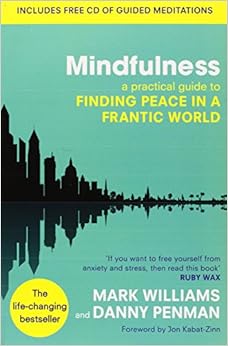
Here we are. Being aware. And I'm aware that I haven't written my blog in a while- for good reason. Despite the fact I have been reading three books at once, I have started my own course of 'mindfulness' based on the hugely popular book 'Mindfulness: a practical guide to finding peace in a frantic world' by Mark Williams and Danny Penman. Some may approach this with a degree of cynicism, but the benefits of this practice  (and it is a practice) is profound. I am on Week Three and I have already changed my job, stopped drinking coffee and found a sense of calm when usually, as a teacher, I have been stressed to the bone!

All mindfulness demands is a little bit of discipline to practice some guided meditations at least twice a day for no more than twenty minutes at a time. Considering some people will pop a pill or two twice a day to combat depression or anxiety, it is perhaps more beneficial to consider mindfulness as a natural alternative which is ultimately more rewarding. It is your mind, after all, and it deserves special attention.

From the ages of sixteen to about twenty-five I had been vulnerable to bouts of depression and anxiety, It is a brave thing to admit this, and at the time I found it hard to acknowledge or talk about.  Nonetheless more and more people today are 'coming out' about such conditions and I think this is right. At university I suffered such extreme panic attacks that once I collapsed against a fence walking into town. I felt there were no options; I was trapped. Although I don't suffer this anymore, I am, like a lot of people, prone to daily stresses and anxieties which could, if unchecked, spiral down into unmanageable negativity. The world isn't slowing down; it is a mad rush. Internet, social media, mobile phones, a hundred different passwords, emails, busy trains, longer working hours, higher prices, higher expectations and economic instability are all the causes for a very modern set of stresses affecting many people's mental health and well being. Children are being diagnosed with far more conditions and behavioural or emotional issues, arguably as a result of this increasingly frantic and materialistic world, which even the parents find difficult to contend with.

Mindfulness is a practice designed not to remove these stresses but to help discover a sense of calm in our whole being and to accept the world around us. It is also a means for becoming more open, less selfish, and more aware of our relationship between our body, mind and the external world. Of course, some may dismiss this all as New Age mumbo-jumbo or be put off by its religious or spiritual connotations, but it is not this. Mindfulness is simply a set of tools, a practice, to find a sense of peace and acceptance in YOU. It is not critical or preachy and practices involve simple breathing techniques, body scans, basic yoga stretches and 'habit releasers' which include activities like going to the cinema to watch something unusual or watching TV 'mindfully'. By practicing, even for twenty minutes a day, the benefits are felt mentally, emotionally and physically. A scientific study has even proven that mindfulness, done purposefully, can alter brain states to make an individual more happy and more calm by shifting the activity of awareness away from the frontal lobe of the brain.

I am merely on Week Three and I have noticed the benefits. This is not to say that I am calm all the time or that I have run off to be a priest on a mountain. But I have felt significantly calmer and more aware of my thought processes. The result has been that I went to an interview for a new job, at a new school, and taught a lesson completely calmly, enjoying it in fact. When I was formally interviewed I was calm, open and positive and in consequence I got the job. This might have been a bigger deal other times, but I was accepting and a sense of peace washed over me. Even heading off to work, I no longer rush. I am more mindful of eating well in the morning and taking my time to notice the world around me when I walk to the train. And now I realize that I have enough time anyway, and that the rush, the frantic nature of life is pointless. I am developing a greater sense of awareness and I am more willing to accept and enjoy what I have.

Above all else, I am enjoying reading the book (with its CD of guided meditations) which is taking me on a real journey of self discovery. I may have a sudden breakdown, but I feel I could accept that. We shall see. I will keep you posted on how I get along...